Fewer Mysteries: Notes on Thurston Moore’s Sonic Life (2023)
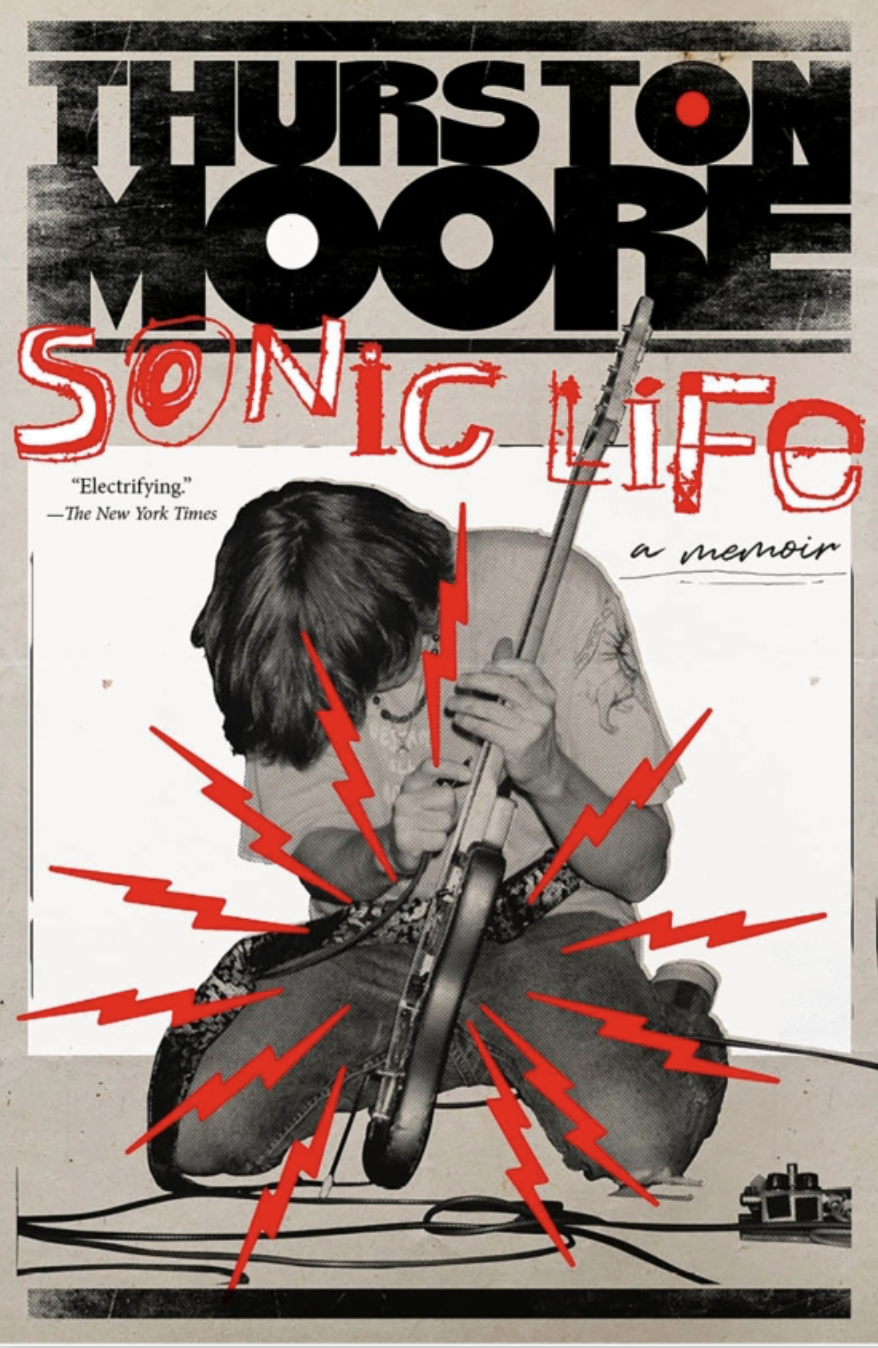
Alt-rock legend Thurston Moore’s Sonic Life stands on its own merits as memoir, particularly in documenting a certain era in the American musical underground. I had expected that, but I hadn’t expected to have a surprisingly personal response to the book, which surfaced some of the ways life has come to feel different for me.
While I was as interested as anyone in gaining insight into Sonic Youth, Moore’s best-known musical venture by far, I went into Sonic Life particularly excited for first-hand descriptions of a pivotal period in American cultural history when punk and hip hop were just coming into their own. It succeeds admirably on that front. Moore wisely orients those chapters around the day-to-day realities of life on the Lower East Side in the ‘70s, the NYC of Smithereens and Taxi Driver, and those sections stand out as the best of the book. The observations on No Wave were particularly illuminating (I’d always thought of it as post-punk, but it was really more contemporaneous with it).
It’s true some of Sonic Life’s vignettes probably could have been abbreviated. Also, as many have noted, the book is light on introspection and does indeed get a little bogged down in scene minutiae. For my part, given Moore’s expertise in the aesthetics of noise, I would have appreciated more sustained reflection on sound as material for creative production (e.g., noise, silence, and ambient din vs. notes and melody), though I can’t expect the book to achieve goals it hasn’t set for itself.
Regardless, one thing that everyone would seem to agree on is that Moore writes with moving, encyclopedic knowledge about music. I was, for example, curious to read that when working with producer Butch Vig, hot off his successes with Nirvana, it was Vig’s work on an obscure 7” by 1980s Madison hardcore band Mecht Mensch that Moore chose to guide the sessions. This could have come off as hipster posturing on Moore’s part, but it doesn’t. It rings true.
Anecdotes like that are where the key personal insight I took from the book comes in. I can remember when I lived life with the persistent feeling that the truly innovative, ground-breaking material was always right around the corner. By extension, it seemed only natural that the musicians producing the most exciting and innovative work were busy taking influence from those underappreciated riches, devouring the high-octane intellectual sustenance that fed new and explosive ideas.
It was an adolescent illusion, and I was an adolescent when I had it. But it was enlivening; the world felt vibrant with possibility. Of course, it became clear quickly enough that with slight variation, everyone listened to the same things you listened to and read the same things you read. They may or may not have had a greater grasp of the burning issues of the day than anyone else you knew (often not).
While it’s easy to dismiss this as youthful naiveté meeting reality, there’s more to it than just that. For example, for better or worse, the infinite jukebox of modern streaming has condensed periods of exploration that would have previously taken months if not years into hours if not minutes (for an illustration, see the Mecht Mensch YouTube link above). Needless to say, that change has helped to deflate that feeling of a horizon of unexplored cultural vistas out yonder.
Another reason for this change is related to the general mechanics of knowledge: given that it can take years if not a lifetime to contribute to a field, it’s shocking how quickly you can develop basic competence in one. You get diminishing returns really fast after advancing one or two levels of depth beyond the canonical stuff. Put differently, unless you’re looking to be a professional, there is often just less to know than it can seem.
Indeed, this reflects how a lot of life can come to feel. As a somewhat crass metaphor, amateur porn star Alex Jett puts it well when explaining the repetitive nature of pornography: “Well, there are only so many ways you can do this [intercourse].” Vulgarity aside, his point stands: often there are only so many ways things can shake out.
Despite it all, this shouldn’t sound too jaded or cynical. As Celan said, “Everything is less than it is, everything is more.” From one vantage point, a concert can only go so many ways (jump on the stage, jump off the stage, bring other people on the stage, destroy the stage, etc.). From another vantage point, a concert can change lives. That’s not stupid or pretend, and it’s not nothing.
Besides, there are plenty of nice things about the collapsing of that lived horizon of an elite cultural unknown. It’s democratizing, for example. Still, it’s hard not to feel that a bit of the glamor and mystery of things has dropped out on the way. And that’s worth lamenting.
To return to Sonic Life, there are many ways a book can feel like it arrived in your life at the right time. Some change your thinking in ways that feel uncannily well-timed. Others articulate thoughts that have been on the tip of your tongue. For me, Sonic Life surfaced a way life has come to feel a little more familiar and a little less mysterious. And it inserted a shot of mystery back into my cultural roving. You’d have to be a pretty sophisticated connoisseur not to find something new in Sonic Life’s endless musical references, and tracing those auditory footnotes is a huge part of the fun.
The underground still has many riches to give, and guides like Moore can point us to the vanguard while himself being a part of it. That’s a helpful reminder at a time when I think many of us would be grateful for a little (non-horrifying) mystery in our lives.